
Company · August 6, 2026 · 12 min read
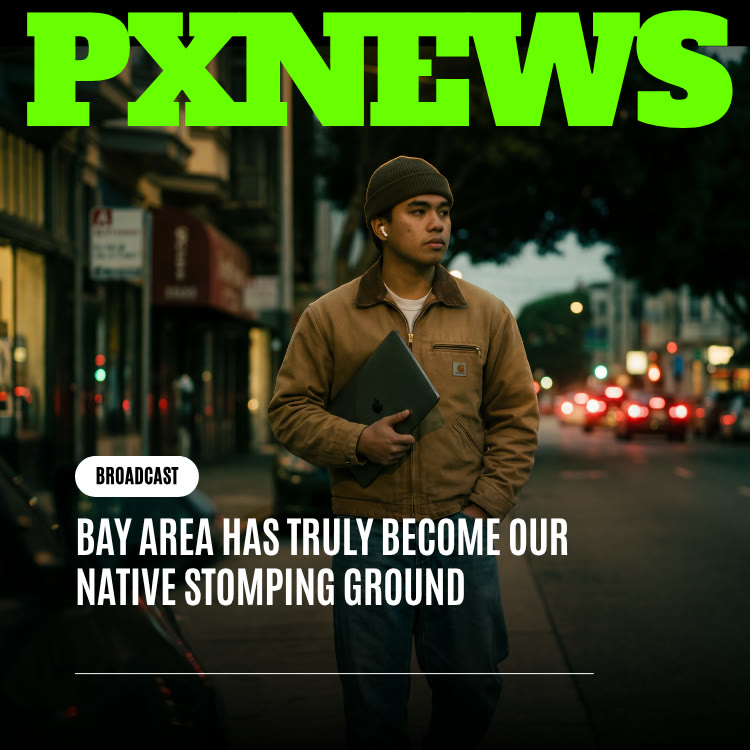
Bay Area Has Truly Become Our Native Stomping Ground
How the Bay Area became home for the ETAPX team, from coffee shop debates to ridge trail walks, and what local roots mean for businesses using Whistlr.
For the ETAPX team, the Bay Area has become much more than the place the company happens to be headquartered. Years of daily routines, including a favorite coffee shop table, a ridge trail walk for working through hard problems, neighbors who follow the company's progress, and traditions nobody planned, have turned the region into a genuine home base. This article looks at what that rootedness looks like day to day and why it matters for how ETAPX builds products like Whistlr, including tools for local businesses.
From Headquarters to Home: What a Native Stomping Ground Means
An office address is paperwork. A home turf builds up around you over time. It is the order a barista starts before you reach the counter, the route you take without thinking, and the small local knowledge you could not have arrived with. Nobody chooses that kind of home in a single decision. It builds up quietly, one ordinary weekday after another, until one day you realize it is there.
That is what has happened to ETAPX in the Bay Area. The reasons AJ chose to build the company in a shared physical space rather than going remote-first are a separate story, told in Meet AJ, Founder and CEO of ETAPX. This piece starts after that choice and stays in the present: what daily life in the region looks like for the people who make Whistlr, GLSRM, Ocsidian, and Influxx.
A Team That Arrived From Everywhere
Only a handful of team members were raised in the region. Ask where they are from and the answers range across states, countries, and continents. Most arrived for this job or a previous one, carrying boxes and no opinions at all about local traffic, weather, or which bridge to avoid on a Friday.
That turns out not to matter much. In this piece, "native" has nothing to do with birthplace. It describes the ease you earn after years of repeating the same local routines. That is true for ETAPX and for a large share of the region itself, which has long been shaped by people who came from somewhere else and decided to stay.
There is a benefit to that mix. A team assembled from many backgrounds brings different expectations about how people use technology, how communities form, and what feels respectful online. Those perspectives show up in product debates, especially for a social platform used by adults with very different lives.
The Corner Coffee Shop Where Ideas Get Argued Out
Most teams eventually find a place like this. For ETAPX, it is a small coffee shop a short walk from the office, with a single round window table that barely fits four people. On many weekday afternoons, a few team members are crowded around it with laptops that went to sleep long ago, because nobody is typing anymore. They are just talking.
No one ever scheduled this. It became the default spot for decisions that needed more room than a chat thread or a meeting room allowed. A meaningful amount of Whistlr's shape has been debated at that table, sometimes long enough that the afternoon turned into evening without anyone noticing.
When the Barista Knows Your Order
Belonging shows up when the staff skip the question of what you want. AJ's usual, a large plain black drip, predates almost everyone now on the payroll, and it tends to appear before he finishes saying hello. Other regulars have more complicated orders that may not even be on the menu, and they get them anyway. New hires pick up on this the way you absorb any shared ritual, gradually and by observation, until the day their own order starts the moment they walk in.
The Walk: How a Ridge Trail Became a Thinking Tool
Behind the office, a trail climbs a ridge steeply enough that the first few minutes are too hard for conversation. That turns out to be the point. At some stage in the company's early years, "I'm going for a walk" became shorthand for "I'm stuck, and sitting here isn't helping." Nobody decided this. It simply repeated until the phrase caught on across the office.
Every walk follows one loop: up the ridge, past a bench beneath a huge eucalyptus that sheds bark everywhere, out to a lookout where the fog has or has not lifted, and back by a slightly longer path. The loop takes about twenty-five minutes, which is roughly how long most stuck problems need to either resolve or stop feeling urgent.
Pockets Stay Zipped Until the Bench
The walk has exactly one rule: phones stay put until the bench comes into view, and pulling one out there still earns a look. Several important conversations happened on that trail. Much of GLSRM's early editorial voice took shape in fragments over a series of walks. The trail also hosted discussions about who Ocsidian's BlackFrost Engine was really for. The technical choices were made at desks, as they usually are, but the question of audience turned out to be a walking question rather than a whiteboard one.
Some problems get solved at a desk. Others need a hill, a bench, and twenty-five minutes without a phone.
How to Build Your Own Thinking Walk
You do not need a ridge trail to borrow this habit. If you run a business or create content, a regular thinking walk can be one of the most useful tools you have.
- Pick a fixed route: Repeating the same loop removes decisions so your mind can focus on the problem.
- Keep it short: Twenty to thirty minutes is enough for most problems to shift.
- Leave the phone alone: Set a point on the route before which you will not check it.
- Bring one question: Frame the problem as a single question before you leave, such as who this product is really for.
- Write it down after: Capture what you figured out as soon as you return, before the clarity fades.
Signs You Have Gone Local in the Bay Area
Newcomers adapt faster than they expect. There is a moment, slightly embarrassing, when you point a visitor toward a landmark ridge rather than an actual road, and it dawns on you that you now sound like the locals who used to confuse you. Around the office, the telltale signs include:
- Specific city names: Vague references to "the city" disappear in favor of a real name, because you finally have reasons to be precise.
- A fog theory: You hold firm views on which months are worst and which blocks somehow stay clear.
- A guarded bridge shortcut: You treat your best route like a favorite parking spot, shared only with people you trust.
- Strong opinions on local debates: Sourdough, breakfast burritos, the best view from any hill. You picked a side and will defend it.
- Transit intuition: You can sense a bad commute day before you check the app.
- Distance in minutes: You measure trips in time rather than miles, usually right about one and wrong about the other.
None of this goes on a résumé. It just appears once you have lived enough unremarkable weeks in the same spot.
Neighbors and Regulars Who Joined the Story
A company expects to have customers, vendors, and with luck a community. What is harder to predict is a quieter group of people who are none of those things and still become part of the story simply by being around.
For ETAPX, that includes the owner of the coffee shop, who has overheard enough feature debates to have strong opinions of her own and who eventually joined Whistlr herself. It includes a delivery driver who has handled the team's shipping long enough to ask about specific launches by name, and a vendor at the weekend farmers market who started following Whistlr after catching the team talking about it at her stall week after week. None of them are on the payroll. All of them are part of how the team experiences the neighborhood.
That web of everyday relationships also keeps the team grounded. It is hard to lose sight of what a social platform is for when the people who use it pour your coffee and sell you strawberries. The team's broader efforts to give back nearby are described in Learning to Create Positive Impact on Our Local Community.
Having people greet you personally at a café, a market stall, and a shipping counter within a few blocks creates a particular kind of closeness. It does not come from trying to build relationships. It comes from showing up consistently and never treating those everyday exchanges as unimportant.
Everyday Logistics: Commutes, Fog, and Shared Know-How
The parts of putting down roots that people actually talk about are rarely glamorous. Nobody writes inspirational posts about parking permits. But anyone who has truly settled somewhere knows that logistics make up a big share of what rootedness feels like.
The Commute Theories
Everyone on staff swears by a private formula for dodging traffic at particular times of day. Each theory is at least partly wrong, and each is defended anyway. One stretch of highway can turn a short drive into a long one with no obvious explanation, usually right after someone has assured a new hire that traffic really is not bad. Thick morning fog over the hills adds its own delays. People learn to leave extra time not because anyone tells them to, but because they got caught out once.
Knowledge Nobody Wrote Down
Need a spare key made in a hurry? Wondering which pharmacy stocks allergy medicine during peak pollen season, or which nearby gas station keeps prices steady? Several people will answer confidently without remembering how they learned it. This kind of local folk wisdom gets passed to each new arrival informally. It is a surprisingly reliable sign that a team has settled somewhere rather than simply renting space near it.
Team Traditions That Grew Without a Plan
No one designed a calendar of company traditions. Like the walk and the coffee orders, they built up through repetition until somebody finally pointed out that a custom already existed.
- Ship-day donuts: Whoever ships a feature or fix brings donuts the next morning. One attempt to replace this with something healthier lasted a single round.
- The Fourth of July overlook: A good portion of the team, plus neighbors and community members in town, gathers at the same spot with a clear view of fireworks over the water. Nobody organizes it officially.
- The suspicious pumpkin: For two years running, the Ocsidian team's Halloween contest entry has looked a little too perfectly lit to have been carved by hand.
- The ceramic seagull: One famously ugly gift has won the office White Elephant exchange three years straight and keeps being re-gifted with growing ceremony.
Outsiders would shrug at every item on this list, and that is the point. Small, slightly ridiculous rituals are what turn a location into a home. You can read more about the team's culture in Embracing Culture at ETAPX.
What Local Roots Mean for Businesses on Whistlr
Knowing your neighborhood well changes how you think about local businesses, and that perspective shapes Whistlr. The coffee shop, the market stall, and the corner pharmacy are exactly the kinds of businesses that benefit from being visible to the people nearby. ETAPX has written about this directly in Our Goal With Helping Local Businesses on Whistlr. Here is how a local business can use the platform today.
- Tag your location on posts: Nearby is a map of tagged posts, built around "Posts, not people." Places appear only on posts you choose to tag, and location stays off unless you turn it on.
- Host or join a Haven: Havens are location-based communities that live on the map. A neighborhood Haven can become the place regulars gather online.
- Show up on Radar: Radar is Whistlr's map of Havens, and it is also an ad placement for businesses that want to reach people exploring their area.
- Boost a strong post: A Boost with the goal of more profile visits can put your best post in front of more local eyes. Business budgets start at $25. See how Boost works.
- Target by location in Ads Manager: Campaigns can target specific locations alongside interests and age ranges. Learn more in reach your target audience.
- Act like a regular yourself: Reply to comments, recognize repeat customers, and share behind-the-scenes Stories. Local loyalty is built the same way online as it is at the counter.
Frequently Asked Questions
Where is ETAPX based?
ETAPX is based in the Bay Area. Over time, the region has become a true home for the team rather than just the city on the company's address.
Did most of the ETAPX team grow up in the Bay Area?
No. Most team members moved there from other states and countries. In this article, being native refers to the familiarity built through years of daily routines, not to birthplace.
What is the ETAPX thinking walk?
When someone is stuck on a problem, they take a roughly twenty-five-minute loop up a ridge trail near the office. The one rule is no phone until reaching a bench along the way.
Why did AJ choose to build ETAPX in person in the Bay Area?
That decision is covered in a separate story about AJ's preference for building in a shared physical space instead of going remote-first. This article focuses on what daily life looks like after that choice.
How can a local business get discovered on Whistlr?
Tag your location on posts so they appear on Nearby, host or join a Haven, consider Radar ads or a Boost aimed at profile visits, and use location targeting in Ads Manager. Consistent, personal engagement with customers matters as much as any tool.
Does Whistlr show where I am on the map?
No. Nearby shows posts, not people. Location stays off unless you turn it on, and a place only appears on posts you choose to tag.
No one plans a place like this into existence. It forms out of shared routines, familiar faces, and a trail that helps when work gets difficult. For ETAPX, the Bay Area has become home in that sense, and that feeling shapes how the team thinks about every community Whistlr serves.