Company · August 13, 2026 · 12 min read
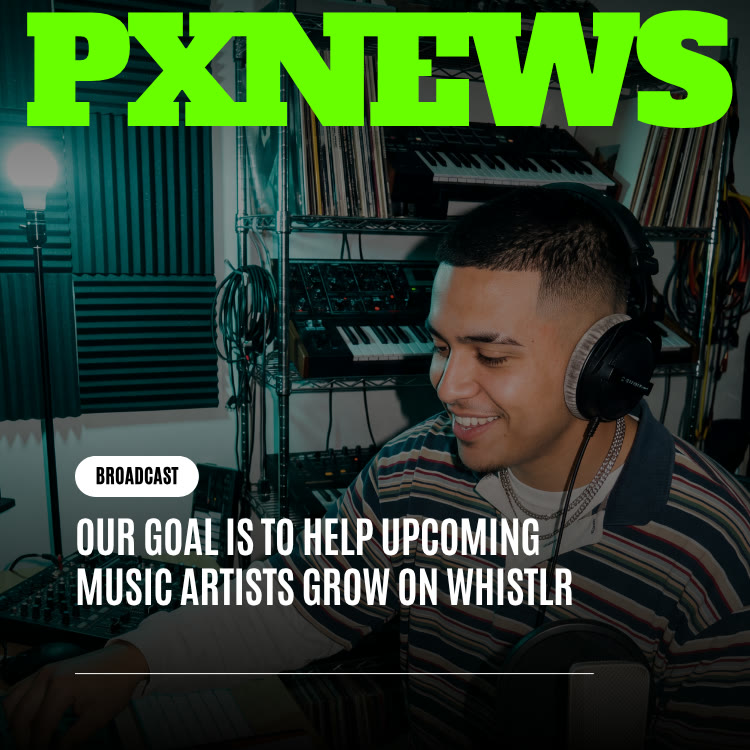
Our Goal Is to Help Upcoming Music Artists Grow on Whistlr
Why ETAPX wants upcoming music artists to grow on Whistlr, and how independent musicians can use Minis, Live, Echo and Vault to build a real following.
Whistlr's goal is for upcoming music artists to grow here, and by that we mean independent musicians without a label, a team or a marketing budget behind them. ETAPX treats this as a long-term goal that shapes how the music side of the platform is built, not a one-time feature launch. This article explains why we care about it, what we mean by growth, and how artists can use Whistlr today to turn a handful of real listeners into a lasting audience.
Why Upcoming Artists Sit at the Center of Whistlr's Music Plans
Whistlr is built for creators of every kind, but music has a particular role in why ETAPX exists. Few art forms turn strangers into a community as quickly. People adopt a sound as part of who they are, gather in the same rooms to hear it, attach songs to moments in their lives and carry them for years. When a platform handles music well, it is not just moving files around. It is giving people something to gather around, and gatherings are what healthy communities grow from.
Upcoming artists have the most to gain from that. A signed act with an agent and a promotion budget can simply move elsewhere when a platform underdelivers. A solo artist who writes, records and plays every note usually cannot; they rely on whatever tools they can reach. That imbalance is why ETAPX sees this as one of the most valuable places to focus. Choosing to build for the artist without a team is a deliberate decision about who gets leverage, and we would rather spend it on the songwriter working a day job than on someone who already has every advantage.
AJ, ETAPX's founder and CEO, has framed it simply: serving musicians who arrive with an audience is easy, and it is not what interests him. What he cares about is the musician with a modest but real fan base who wants it to keep expanding, one stage at a time, with no one needing to sign off. In his view, that is the reason Whistlr's music side exists at all.
The Discovery Bottleneck Independent Musicians Face
For most of recorded music's history, an artist reached listeners only after someone with authority said yes. Labels decided who to sign. Radio decided what to play. Editors decided who deserved coverage. Later, playlist curators decided which tracks got placed in front of large audiences. Each step narrowed the field, and the number of musicians who got a real hearing was tiny compared with the number making music.
That system produced great records and real stars. It also left a long list of artists who never learned if listeners were out there waiting, simply because no one holding the keys gave them a chance. Streaming was expected to fix this, but in many cases it swapped human gatekeepers for automated ones. An algorithm that picks what surfaces still controls the gate; it simply chases different goals. And it seldom finds music the way people do, by a friend insisting you listen, a performance that makes you stop mid-scroll, or a track someone drops in a group chat because they cannot stop playing it.
ETAPX does not think labels, curators or programmers act in bad faith. Most are music lovers working inside a structure designed before the internet. The disagreement is with the structure itself, which concentrates the power to decide who gets heard in very few hands, and with the unexamined assumption that discovery has to be rationed. Talent has never been the scarce resource. Access to an audience has.
Why We Talk About Growth Instead of Discovery
The wording is deliberate. "Discovery" describes a single moment: you get found or you do not. "Promotion" describes something done to an artist from the outside. "Growth" describes a process the artist takes part in, where a following becomes a little larger and a little more loyal over months and years. That is how most music careers have actually been built.
Choosing growth also sets a harder standard for ETAPX. A discovery goal could be declared met after a few breakout stories, whatever became of the rest. A growth goal asks about everyone: is the artist who arrived with a few dozen listeners clearly better off twelve months on? That question is harder to answer cleanly, and that is exactly why it is the right one.
It also changes how product decisions get made. When the team weighs a change to how music surfaces, the question is not whether it will look impressive in an announcement. It is whether a musician with a small but loyal audience gets a better shot at expanding it. Holding to that sometimes means declining ideas that would create a burst of attention and little else.
Talent has never been the scarce resource in music. Access to an audience has.
Community as the Filter That Replaces Gatekeepers
If gatekeepers are the bottleneck, removing all filters is not the answer. A feed with no filtering at all becomes noise, and an unknown artist gets lost in noise just as surely as they get shut out by a gate. ETAPX's view is that a well-built community is a better filter than any single curator. It is not perfect in every case, but it is distributed, honest and cumulative.
A curator's choice is one person's taste applied to millions of listeners. A community's choice is the sum of countless small decisions: one friend sending a song to another, someone saving a track they actually replay, a viewer who sticks around until the final song. Combined, those signals show what really moves people, not what one tastemaker guessed would.
That belief explains why Whistlr has not rebuilt its music experience around whichever format happens to be trending in a given month. Chasing trends can produce a quick spike. Building the pieces that help genuine fans connect with one another and rally behind a musician is slower, but it compounds. You can read more about the relationship between Whistlr's community and music in The Community Loves Music, and Music Loves the Community, on Whistlr.
How Upcoming Artists Can Use Whistlr Today
Mission statements matter only if artists can act on them. Here is how independent musicians can use the platform right now.
Share performances as Minis
Minis are full-screen vertical videos, ideal for a chorus, a stripped-back acoustic take, a studio snippet or a quick lesson. The Minis camera includes beat-synced Templates, multi-clip recording, a Teleprompter for lyrics or talking points, and the in-app editor handles videos up to ten minutes across three video lanes.
Let fans build on your sound with Echo
Echo lets anyone record their own video while the audio from your video plays, so your song becomes the soundtrack to their clip. Every Echo puts your sound in front of a new set of viewers. Our deep dive into Echos and Reactions explains how it works.
Perform live
Go live from your phone, or use Whistlr Studio with an encoder for a more produced set. Bring up to eight co-hosts into a stream for collaborations, take questions, run polls, and set a gems goal tied to something your audience wants, like a cover request or an unreleased song. Rooms, Whistlr's live audio rooms, suit listening parties and conversations about your process.
Make your profile sound like you
Set a profile song so visitors hear your music the moment they land on your page, and build a Cruise Control playlist of up to 40 songs. Whistles can include an Apple Music track, and Waves surfaces music through Apple Music, so released songs can travel through the app.
Find your local scene
Havens are location-based communities, and Radar shows them on a map. They are a natural fit for promoting a show, meeting other musicians nearby and building the kind of local following that fills a room.
A 30-Day Starter Plan for Musicians on Whistlr
If you are starting from zero, structure helps. This plan is a simple framework, not a guarantee, but it builds the habits that growth depends on.
- Days 1 to 3, set up: complete your profile, add a profile song, write a short About Me, and pin your best performance clip.
- Days 4 to 10, post consistently: share a short Mini every day or two, each focused on one strong moment from a song. Lead with the hook rather than a long intro.
- Days 11 to 14, invite participation: post a clip designed for Echo, such as an instrumental loop or a chorus with a clear beat, and ask viewers to make their own version.
- Days 15 to 20, go live: host a short live set. Take requests through Questions, run a poll on what to play next, and thank everyone who shows up by name.
- Days 21 to 25, collaborate: invite another artist as a co-host, or react to their work with a genuine response. Shared audiences are the fastest honest way to grow.
- Days 26 to 30, review: check your professional dashboard insights for views, interactions and most active times, then plan the next month around what worked. Our growth guide covers more tactics.
Turning Listeners Into Support: Earning as an Independent Artist
Growth should eventually help artists sustain their work. Whistlr's monetization tools give independent musicians several ways to earn directly from the people who care about their music.
- WTC Gems: fans send live gifts during your sets. You publish up to 15 gems priced from $0.99 to $500, and Whistlr's fee is 15%.
- Tips: listeners can send between $1 and $500 as a direct thank-you, with a 15% fee.
- Subscription Vault: keep demos, alternate takes, rehearsal footage or songwriting sessions behind a monthly subscription between $1 and $999. Whistlr's fee is 20%.
- Whistlr Go storefront: sell merch through your own storefront, with integrations including Printful and Shopify, at a 15% platform fee. Business accounts can also pin products during a live with Live Shopping.
Payouts run through Stripe Connect, and a business account with Stripe unlocks the storefront and the full Business Suite. Whistlr also offers Boost if you choose to put budget behind a post, but the growth we care most about is the kind you earn through real listeners. ETAPX's belief is that an artist who cannot afford advertising should still have a fair path to an audience if the music connects.
What We Hold Ourselves to as This Commitment Continues
ETAPX is not presenting this mission as finished. The problem it responds to took decades to form, and one platform doing things differently in its corner of the internet does not undo it. What the company can promise is a heading: each choice about music on the platform is judged by its effect on artists still waiting for their break, and not just on those who already had one.
That means revisiting whether tools serve the smallest artists as often as the largest, learning from musicians who are actively trying to grow, and being honest when something is not working. It is a standard ETAPX expects to apply for as long as it builds Whistlr, even as the specific tools around it change.
There is also a role for artists themselves in keeping the platform honest. The community-led discovery described above only works when musicians support each other: reacting to a peer's new single, bringing another artist on as a co-host, sharing a local band's show in a Haven, or Echoing someone's hook with a version of your own. Every one of those actions moves attention sideways to someone who has not been heard yet, which is the opposite of how gatekept systems tend to work. If you are growing on Whistlr, passing some of that momentum along is one of the most useful things you can do.
For more stories about independent creators building on the platform, read Whistlr Helps Indie Creators Level Up, and if you want to sell merch, start with our Whistlr Go overview.
Frequently Asked Questions
Can independent musicians promote their music on Whistlr without a label?
Yes. Whistlr is designed so artists can share performances as Minis, go live, invite fans to Echo their sound and build a community directly. No label, manager or industry connection is needed to start.
What is the best way for a new artist to start growing on Whistlr?
Post short, hook-first performance clips consistently, go live regularly to meet listeners, collaborate with other artists through co-hosting and reactions, and check your insights to see what resonates. Consistency over several weeks matters more than any single post.
How can fans help an artist they like on Whistlr?
Fans can Echo an artist's video to make their own clip with that sound, share and repost their posts, show up to live sets, and support them with gems, tips, a Vault subscription or merch from their storefront.
Can musicians earn money on Whistlr?
Yes. Artists can earn through WTC Gems during lives, tips, Subscription Vault memberships and a Whistlr Go storefront for merch. Fees are 15% for gems, tips and storefront sales, and 20% for Subscription Vault.
Can I add my music to my Whistlr profile?
Yes. You can set a profile song that plays for visitors and build a Cruise Control playlist of up to 40 songs. Whistles can also include Apple Music tracks.
Is helping upcoming artists a temporary campaign?
No. ETAPX treats it as a long-term commitment with no end date, because the problem of access in music does not resolve on a schedule. It guides how the music side of Whistlr is built going forward.
Helping upcoming music artists grow is a direction ETAPX intends to keep, not a box it has ticked. If you are an artist with a few dozen real listeners and a lot of songs, Whistlr wants to be the place where those listeners turn into a community, at your pace and on your terms.